Basil hit the summit and immediately started begging for water. I had 2.5 liters — all of it electrolyte mix. A dog can’t drink electrolyte water. The look he gave me said everything.
That moment — standing below the Haystack with views of North Bend and a half-clear Mount Rainier stretched out in every direction, my dog giving me the eyes, and nothing in my pack he could actually drink — was the most useful 30 seconds of the whole day.
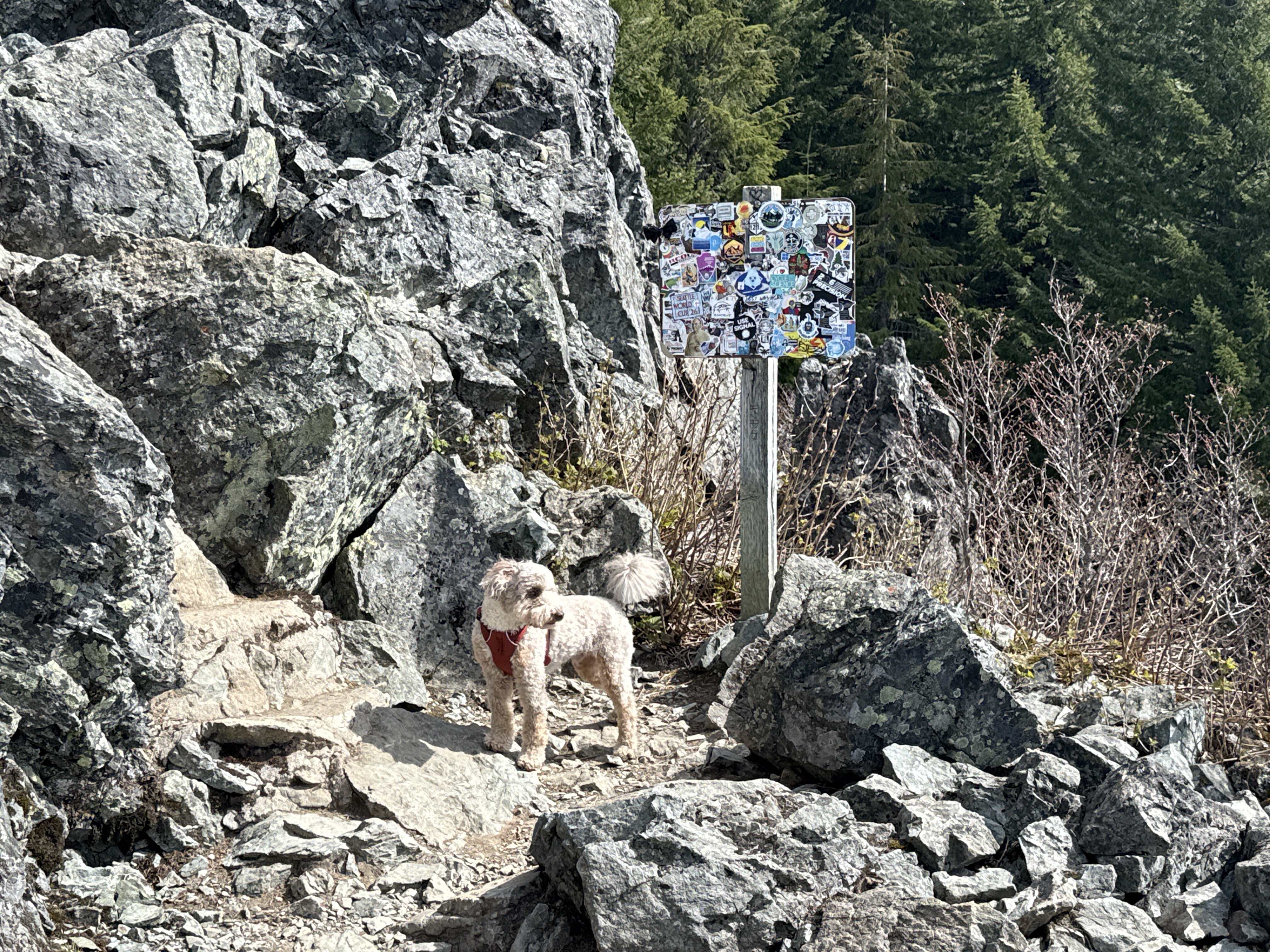
Basil at the top. Unimpressed. Thirsty.
The Setup
I’m training for PCT Section J later this year. Mount Si is the local conditioning standard: AllTrails lists it at 8 miles, though my GPS clocked closer to 10 — though I’ll admit I’m never fully confident how much to trust a GPS track on switchbacks through dense forest. Either way: somewhere between 3,100 and 3,500 feet of gain, and enough sustained grade to expose exactly where your kit falls apart. Rainier prep groups use it for the same reason. It’s also 25 minutes from my house in Issaquah, which matters when a training block needs to fit around school drop-off.
Friday was the best weather day of the year so far — 76°F, 5 mph NW wind, almost no clouds. I took it. Kakwa 55, roughly 27 pounds, and Basil. Out at 8:19. Back at 1:48 — including close to an hour at the top.
The Trail
Mount Si is not subtle. You gain most of the elevation through steady switchbacks in dense forest, which means shade for 90% of the climb but no views until you earn them. The trail is well-maintained — packed dirt, the standard Pacific Northwest mix of roots and rocks. Technical in the same way a long staircase is technical. Not a scramble. Just sustained work.
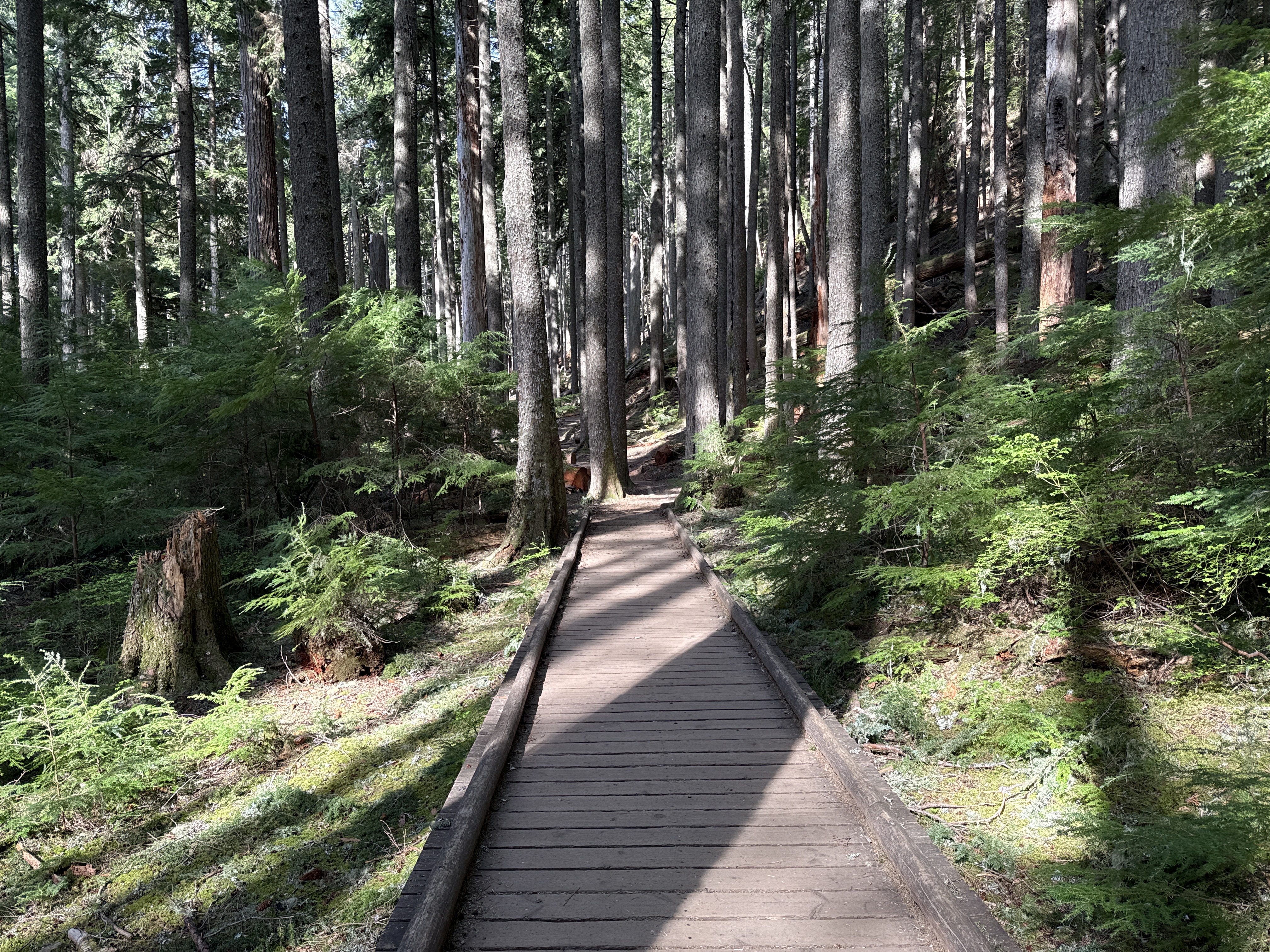
Snag Flat at the midpoint — old-growth trees, a boardwalk, a bench. Not a water source.
One stream crosses the trail in the first mile. After that: nothing. On a 76-degree day with a loaded pack, 2.5 liters is the floor. The midpoint rest at Snag Flat — old-growth trees, a boardwalk, a few benches — is a good excuse to stop, but it’s not a water source.
The talus slope near the top is where the forest finally opens up. The views start arriving before you’re ready for them.
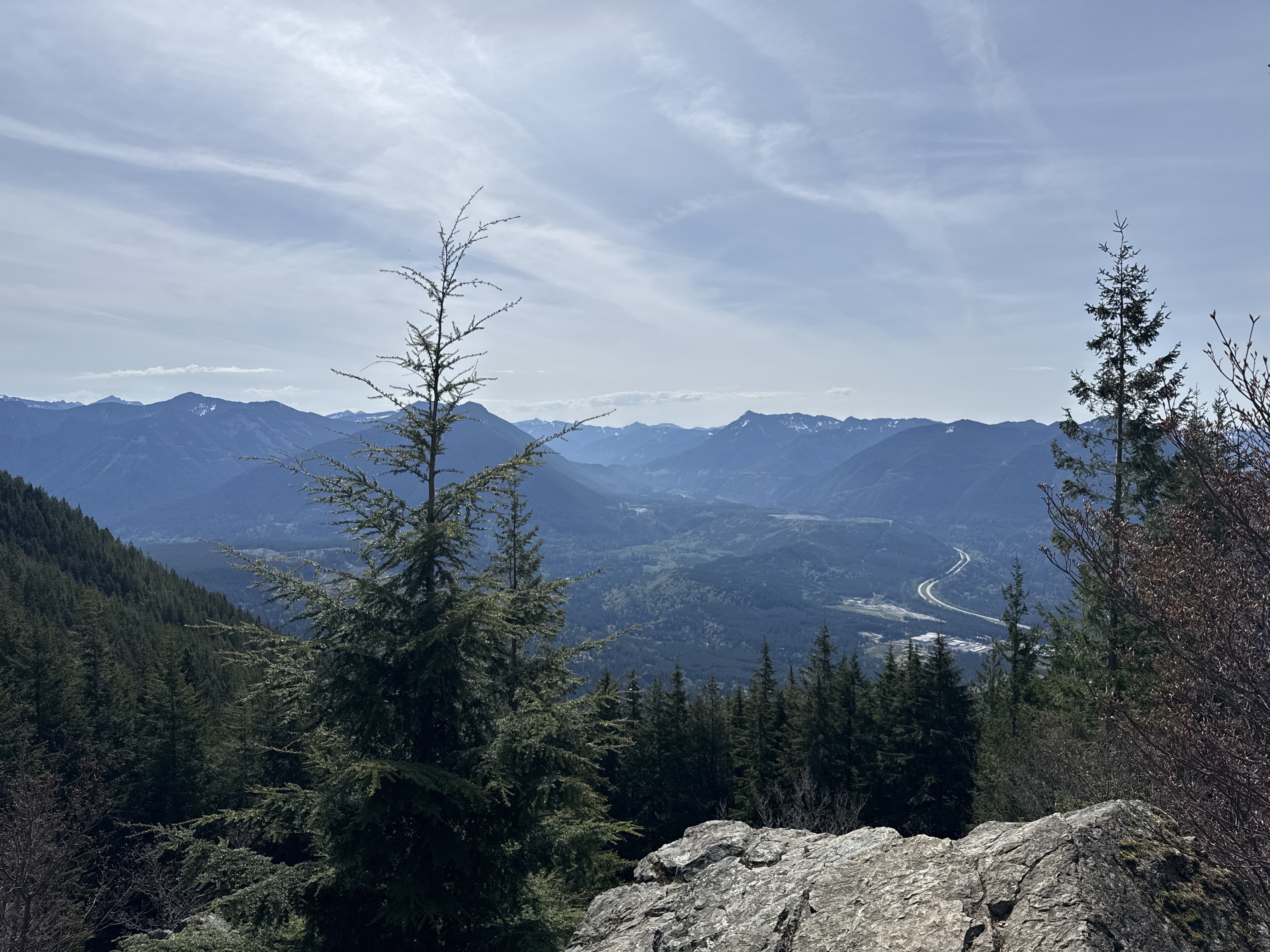
The valley opens up on the talus slope. I-90 winding through North Bend below.
The final 300–400 feet below the summit transitions into loose rock. I got close to the Haystack without going all the way up — I had a full pack, a dog who doesn’t self-regulate on exposed scrambles, and no good reason to push it. I’ll go all the way up another time.
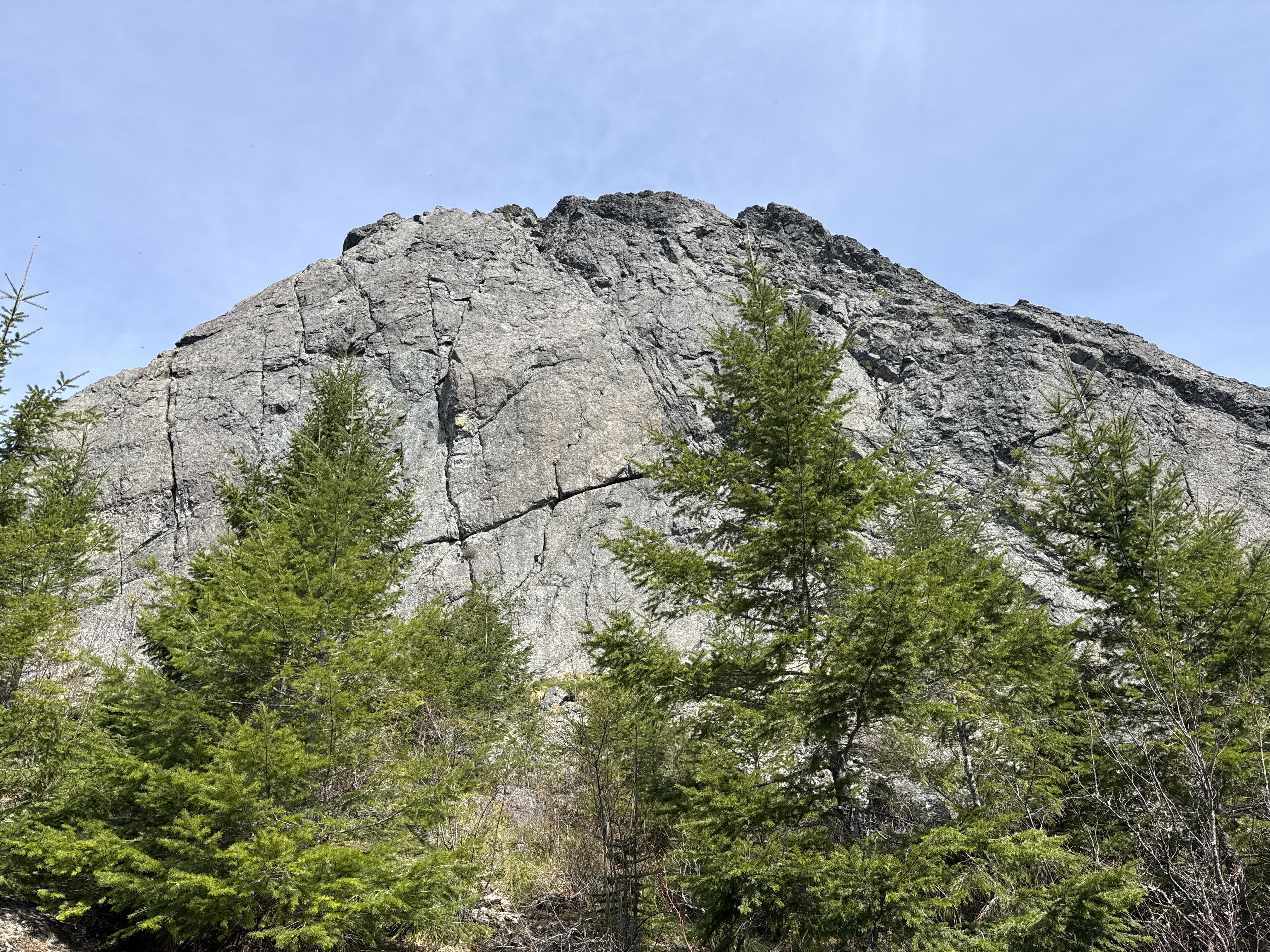
The Haystack. Skipped it. No regrets.
What I did instead was sit at the overlook for nearly an hour. The whole Snoqualmie Valley below, Mount Rainier mostly showing through high cloud to the south. Basil flopped down immediately. I ate trail mix and did not think about anything in particular. This was the correct choice.
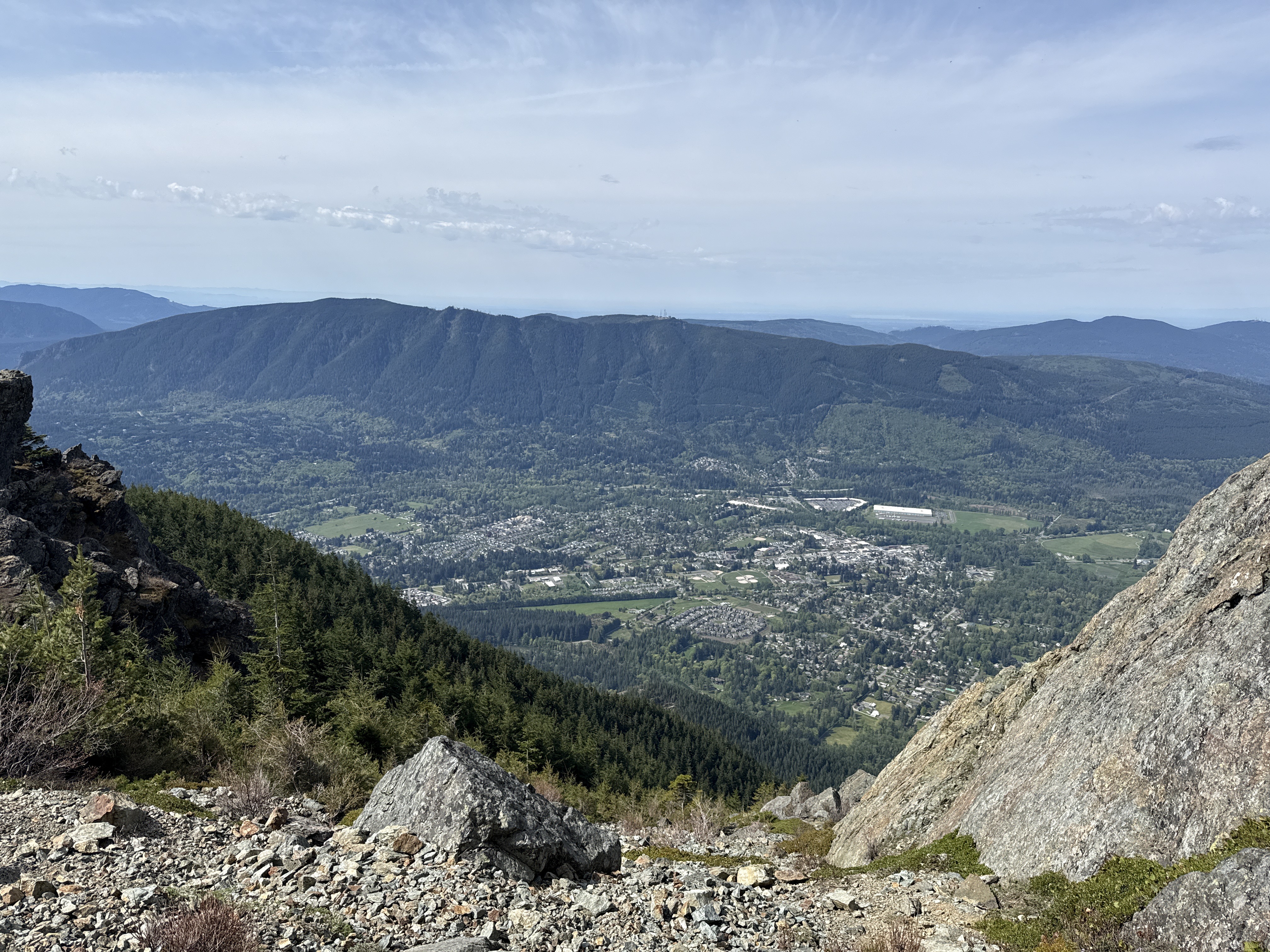
North Bend from the overlook. Worth every switchback.
I rated it 7/10. Good grind up. Nice descent. Does its job.
What the Hike Taught My Kit
This is the part I actually care about. A loaded training hike is a gear audit with scenery. Here’s the debrief:
Topo shoes: pass. The question mark from my last long day. This time — solid heel lockdown on the descent, much less foot movement, no toe impact after 4+ hours. The fit is dialing in.
Trekking poles: partial credit. Hot spots on my hands during the descent. I have gloves; they live in a pocket that’s slightly annoying to reach mid-stride. The fix isn’t new gloves — it’s fixing the access so I’ll actually use them. Pre-hike setup checklist item.
Pack organization: improving. Longer leash and Basil’s water in the side pocket worked better than the hip belt approach from last week. Trail mix left chest strap, water right side — this layout is earning its keep. The pack is converging on something repeatable.
Hip chafing: mid-hike problem. Started during the climb, probably stacked from a hard Tuesday session a few days prior. The fix is simple: Body Glide around the waist and hips before any hike over 8 miles. Pre-hike checklist, full stop.
Basil’s water: gap found. Electrolyte mix is fine for me, not fine for him. He needs his own plain water, separate from mine — especially in warm weather above 3,000 feet, where he has no instinct to conserve. This one was obvious in retrospect.
The Actual Takeaway
Mount Si at 27 pounds taught me more about May than it did about the mountain. The gear is 90% of the way there. The chafing and the water gap are both pre-hike checklist problems — easy to fix once and then stop thinking about. The trekking pole grip issue is a habit problem (use the gloves) wearing a gear problem’s clothes.
The PCT Section J window is narrowing. Every training hike now feeds directly into what goes on the final kit list. Basil is a permanent crew member. He just needs his own water bottle.
Next time I’ll go all the way to the Haystack. When the pack is lighter and the dog is better supplied.